
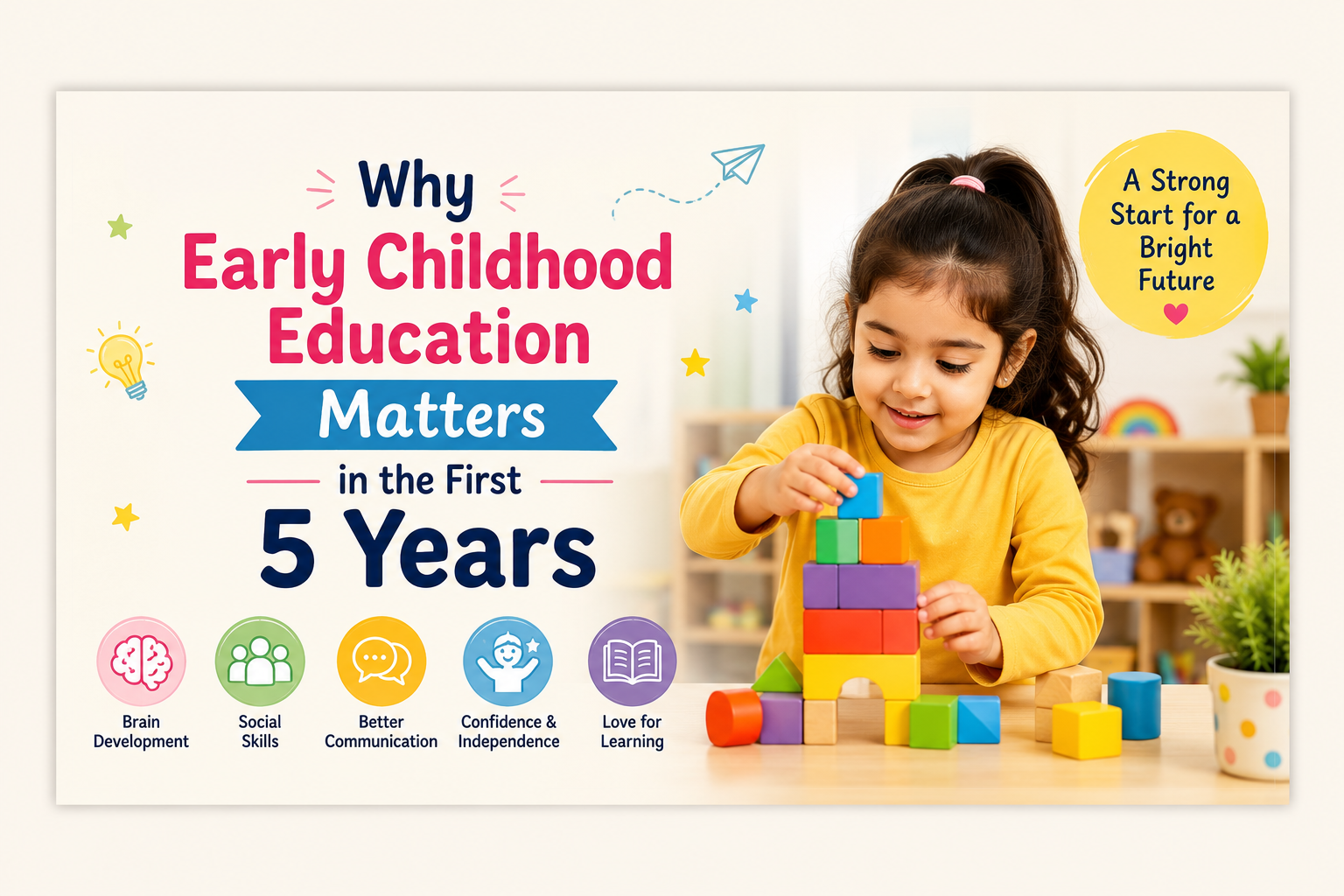
The first five years of a child's life are the most important for learning and development. During this time, a child's brain grows faster than at any other stage of life. The experiences children have during these early years shape how they think, learn, communicate, and interact with others.
Early childhood education gives children a strong foundation for school and life. It helps them develop confidence, creativity, problem-solving skills, and social abilities that will benefit them for years to come.
At ABC Montessori, we believe that every child deserves a safe, caring, and stimulating environment where learning happens naturally through exploration and play.
In this article, you'll learn why early childhood education is important, how it benefits children, and why choosing the right preschool makes a difference.
What is Early Childhood Education?
Early childhood education refers to the learning and development of children from birth to around six years of age. During this stage, children develop important skills through play, activities, storytelling, music, art, and hands-on experiences.
Unlike traditional classroom learning, early education focuses on making learning fun, engaging, and meaningful.
Why Are the First 5 Years So Important?
Experts often call the first five years the "foundation years."
During this time:
- The brain develops rapidly.
- Children learn new words every day.
- Emotional connections become stronger.
- Social skills begin to develop.
- Curiosity grows naturally.
The experiences children receive during these years can influence their future learning, confidence, and success.
1. Supports Brain Development
A child's brain develops quickly during the early years.
Every conversation, story, game, and activity creates new brain connections.
Quality preschool education provides activities that encourage:
- Thinking skills
- Memory
- Problem-solving
- Creativity
- Curiosity
The more children explore, the more they learn.
2. Builds Strong Communication Skills
Communication is one of the most important life skills.
Children who attend preschool learn how to:
- Speak clearly
- Listen carefully
- Ask questions
- Express their feelings
- Build vocabulary
Daily conversations with teachers and classmates improve language development naturally.
3. Improves Social Skills
Preschool is often the first place where children interact with others outside their family.
Children learn how to:
- Share toys
- Take turns
- Work together
- Respect others
- Solve simple conflicts
These social skills help children build friendships and become confident learners.
4. Encourages Emotional Development
Young children experience many emotions every day.
A caring preschool environment teaches them how to:
- Understand feelings
- Control emotions
- Build self-confidence
- Show kindness
- Develop empathy
Emotional learning helps children become happier and more independent.
5. Develops Creativity
Children love to imagine and create.
Activities such as:
- Drawing
- Painting
- Music
- Dancing
- Storytelling
- Building blocks
allow children to express themselves while developing creativity and imagination.
Creative learning also improves problem-solving skills.
6. Builds Independence
One of the biggest benefits of preschool is helping children become independent.
Simple daily activities teach children to:
- Pack their bags
- Wash their hands
- Eat independently
- Organize their belongings
- Follow routines
These habits prepare children for primary school.
7. Improves Physical Development
Physical activities are an important part of early learning.
Children develop:
- Balance
- Coordination
- Strength
- Fine motor skills
- Gross motor skills
Activities like running, jumping, drawing, and building blocks support healthy physical growth.
8. Creates a Love for Learning
Children learn best when learning is enjoyable.
Activity-based learning keeps children interested and excited every day.
Instead of memorizing information, they learn by:
- Exploring
- Playing
- Asking questions
- Experimenting
- Discovering new ideas
This builds a lifelong love for learning.
The Montessori Approach to Early Childhood Education
The Montessori method encourages children to learn at their own pace.
Teachers guide children instead of giving constant instructions.
At ABC Montessori, children enjoy:
- Hands-on learning
- Practical life activities
- Sensory learning
- Language development
- Math activities
- Creative play
- Outdoor exploration
This approach builds confidence and encourages independent thinking.
The Role of Parents in Early Learning
Parents are a child's first teachers.
Learning continues even after school.
Parents can support early childhood education by:
- Reading books together
- Talking with children daily
- Playing educational games
- Encouraging questions
- Praising effort
- Limiting screen time
- Creating regular routines
When parents and teachers work together, children grow with confidence.
Why Choose ABC Montessori?
ABC Montessori provides a safe, caring, and engaging environment where children can learn through play and exploration.
Our focus is on helping every child become:
- Confident
- Curious
- Independent
- Creative
- Socially active
- Emotionally strong
We offer:
- Montessori-based curriculum
- Activity-based learning
- Experienced teachers
- Safe classrooms
- Interactive learning materials
- Individual attention
- Parent communication
- Fun educational activities
Our goal is to prepare children not only for school but also for life.
Final Thoughts
The first five years of life are the most important years for a child's growth and development.
Quality early childhood education helps children build confidence, improve communication, develop social skills, strengthen creativity, and prepare for future learning.
Choosing the right preschool gives children the opportunity to explore, discover, and enjoy learning every day.
At ABC Montessori, we believe every child has unique potential, and our caring environment helps them grow into happy, confident, and lifelong learners.
Frequently Asked Questions (FAQs)
Why is early childhood education important?
Early childhood education helps children develop communication, social, emotional, and thinking skills that prepare them for future learning.
Why are the first five years important?
The first five years are when the brain develops most rapidly, making it the best time for learning and skill development.
What are the benefits of preschool education?
Preschool helps children build confidence, improve communication, develop social skills, become independent, and prepare for primary school.
What is Montessori education?
Montessori education is a child-centered learning method where children learn through hands-on activities, exploration, and independent learning.
How does preschool help with social development?
Children learn to share, cooperate, communicate, solve problems, and build friendships through daily classroom activities.
What skills do children learn in preschool?
Children develop language, motor, cognitive, emotional, social, and creative skills through fun and engaging learning experiences.
How can parents support early childhood education at home?
Parents can read with their children, encourage conversations, play educational games, establish routines, and provide a positive learning environment.
 Why should parents choose ABC Montessori?
ABC Montessori offers Montessori-based education, activity-based learning, experienced teachers, safe classrooms, and a nurturing environment that supports every child's overall development.